


Screen Drying Guide: Proper Screen Print Techniques
In the complex world of screen print production, certain steps are often overlooked. The process of making a screen ready for the press is a science, and perhaps the most underestimated variable is screen drying. Many printers, both new and experienced, assume that if a coated screen feels dry, it’s ready to go. However, this assumption can be the root cause of inconsistent results, failed prints, and wasted materials. A properly dried screen is the bedrock of high print quality.
Proper screen drying is more than just waiting; it’s a controlled process that directly impacts emulsion performance, stencil durability, and the final detail of your print. Think of it like baking a cake, an analogy the expert Mick Orr often uses: rushing the process or using the wrong temperature will ruin the result. This guide will walk you through the essential screen print techniques to master the art of drying a screen, ensuring every screen that leaves your drying area is perfectly prepared for the printing machine.
Why a Properly Dried Screen is the Foundation of Quality Screen Print Jobs
To understand why proper screen drying is so critical, you need to understand the emulsion itself. Liquid emulsion is composed of 60-70% water. For the screen to be usable, all of this water must be evacuated. This is not just about the screen feeling dry to the touch; it’s about a complete chemical transformation. The sensitizers in the emulsion must be in a moisture-free state for the coating to cure properly during the exposure process.
When a screen is not completely dry, several problems arise:
- Poor Stencil Adhesion: Lingering moisture prevents the emulsion from properly cross-linking and adhering to the screen mesh. The stencil can break down prematurely on press.
- Inconsistent Exposure: A damp screen will require longer exposure times. If part of the screen is more dry than another, you’ll get an uneven exposure, leading to loss of detail or a difficult washout.
- Pinholes and Blemishes: If the emulsion is not fully dry, it can be soft and susceptible to damage. Dust and lint that land on a wet screen become embedded, leading to ink spots and pinhole defects in the final print.
- Sensitivity Issues: Heat and UV light are critical factors. All diazo-based emulsions are heat-sensitive. Any temperature above freezing will start the decay of the diazo sensitizer in the emulsion, and the higher the temperature, the faster the decay. If the screen is introduced to UV light too early, even from an unsafe light source in the drying area, premature exposure will begin, rendering the screen unusable.
The Four Pillars of Effective Screen Drying
To achieve a consistently and perfectly dried screen, you must control four key environmental conditions. Getting these right transforms screen drying from a guessing game into a repeatable part of the screen printing process.
1. Temperature
Heat accelerates drying, but too much can be destructive. As noted, higher temperatures speed up the decay of the diazo sensitizer. Most emulsion manufacturers recommend drying at a temperature between 90-110°F (around 40°C). This range is warm enough to dry the screen efficiently without “cooking” the emulsion and compromising the stencil. It’s important to keep the temperature consistent within your drying room or cabinet. A simple thermometer can help you monitor and prevent hot spots.
2. Humidity
Humidity is the single greatest enemy of an efficient drying process. If the air in your drying area is already saturated with moisture (high humidity), it cannot absorb the water from your emulsion. The ideal environment for drying emulsion has a relative humidity of 50% or less. Achieving lower humidity often requires pulling air from an air-conditioned space or, for best results, using a dehumidifier. A screen that takes days to dry in a damp room can be ready in under an hour in a controlled, low-humidity environment.
3. Airflow
Stagnant, moist air will significantly slow down the drying process. You need proper airflow to move the humid air away from the surface of the coated screen and replace it with drier air. However, blasting a dirty fan at your screen is a recipe for disaster, as it will cover your wet screen with emulsion in dust and lint. The goal is gentle, filtered air around the screen. A purpose-built drying cabinet excels at this, providing constant, clean airflow across every screen.
4. Light Safety
Because emulsion is sensitive to UV light, the entire drying process must happen in a light safe dark area. Any exposure to UV radiation can cause the emulsion to begin curing before you get it to your exposure unit. Yellow fluorescent lights are safer than white light, but even they emit small amounts of UV light that can pre-expose a screen over several hours. For a truly professional setup, the screen should be in a completely dark cabinet or room while it dries.
How to Dry a Screen: Methods and Best Practices
Controlling the environment is half the battle. The other half involves proper handling and technique as you dry your screen.
Screen Orientation is Crucial
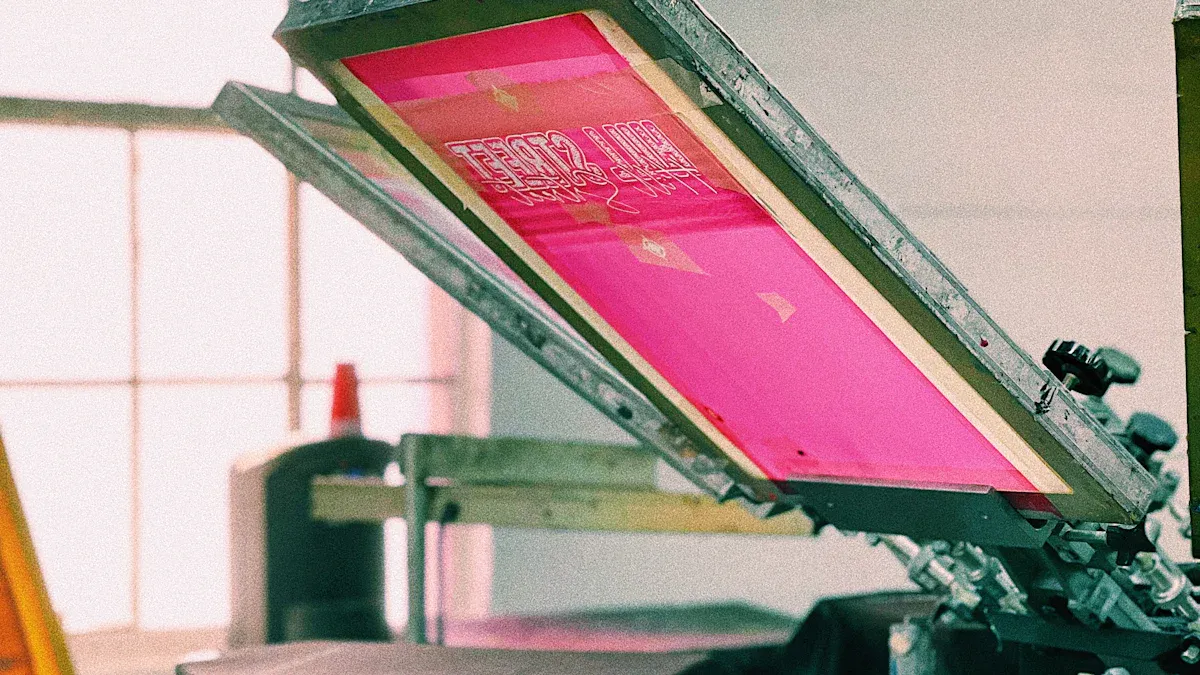
Every coated screen must be dried horizontally with the squeegee side up. This is a non-negotiable rule for achieving the best print quality. When placed this way, gravity helps pull the emulsion through the mesh, creating a thicker deposit on the print side of the screen. This thicker gasket of emulsion sits in front of the mesh and allows for a sharper, cleaner print with fewer mesh marks. When you coat a screen, the goal is to create a perfect stencil, and drying it horizontally helps the emulsion will level out on the print surface.
Methods: From Basic to the Professional Drying Cabinet
- Room Drying: Leaving a screen to dry in a dark room is the most basic method. It’s slow and inconsistent because it’s subject to ambient environmental conditions.
- Active Assist: You can speed up the process by using a hair dryer or fan in a dark room. However, this introduces the risk of dust contamination and uneven drying. A hair dryer can create hot spots, damaging the emulsion on one part of the screen.
- The Drying Rack: A drying rack in a dedicated, climate-controlled drying room is a major step up. It keeps each coated screen separate and horizontal. However, the room itself must be perfectly controlled.
- The Professional Solution: The Drying Cabinet: This is the ultimate tool. A professional drying cabinet is a self-contained, perfect environment. It controls all four pillars: temperature, humidity (often with a built-in dehumidifier), filtered airflow, and total darkness. With a quality drying cabinet, you can dry a coated screen in as little as 15-20 minutes. This speed and consistency are impossible to achieve otherwise. This is the single best investment for any serious print shop looking to improve its screen making. The cabinet ensures every screen is dry and ready to use.
When is the Screen Truly Dry
A coated screen might feel dry to the touch in an hour at 70°F (21°c) and relative humidity of 50%, but that doesn’t mean it’s completely dry. To check, gently touch the tape on the edge of the screen, not the emulsion itself. The only way to be certain is to follow a consistent process. When you use a drying cabinet with set parameters, you know that after a specific amount of time, the screen is dry and its moisture content is ideal for exposure.
The Ultimate Tool for a Perfect Dried Screen: The Drying Cabinet
For any business that relies on repeatable results, a dedicated drying cabinet is essential equipment. It’s more than just a hot box; it’s a precision instrument. A good drying cabinet will feature:
- Filtered Air Intake: Prevents dust, lint, and other contaminants from becoming a pinhole in your stencil.
- Forced Air Circulation: Ensures even airflow across every screen, preventing hot spots and ensuring the entire screen surface dries at the same rate.
- Thermostatic Heat Control: Allows you to set the perfect temperature (e.g., 110°F) and hold it there, taking the guesswork out of the drying process.
- Light-Safe Construction: Guarantees no UV light contamination can ruin your coated screen.
Using a drying cabinet ensures that the dried screen you take to your exposure unit today is identical to the one you prepare next week. This consistency is vital for dialing in exposure times and achieving predictable results on your printing machine. This level of process control is even more critical in workflows that integrate digital printing equipment, where precision is paramount. Investing in a professional cabinet is the fastest way to avoid the common pitfalls of improper drying. A quality cabinet makes every part of the screen printing easier. This critical part of the screen making process deserves the right equipment.
Common Questions About Drying a Screen Print Screen
- What happens if a dried screen gets damp again? Unexposed emulsion is hygroscopic, meaning it can reabsorb moisture from the air. If you store a dried screen in a high-humidity area, it will need to be dried again in a cabinet before use to protect its shelf life.
- How long should I dry a screen? This depends on your coating thickness and drying method. In a professional drying cabinet set to 110°F and low humidity, 20-30 minutes is often sufficient. For air drying, it could be many hours. The key is consistency.
- Can I speed up the drying process with a hair dryer? Yes, but it’s risky for a professional screen. The heat is often uneven and it can blow dust onto your wet emulsion. It’s a method best left for hobbyists.
If you have more questions about drying, the answer almost always comes back to control and consistency.
Conclusion
The quality of your final print is determined long before a squeegee ever touches the screen. The drying process is a foundational step where precision and control pay massive dividends. By mastering the four pillars—temperature, humidity, airflow, and light safety—you eliminate the variables that lead to frustrating and costly errors.
While there are many ways to dry a screen, the most reliable and efficient method for any professional operation is a dedicated drying cabinet. It is the key to producing a perfectly dried screen every single time. Elevate your screen print techniques and ensure every screen is perfectly prepared. Explore the professional drying solutions at Cnding to eliminate guesswork and boost your shop’s efficiency and print quality.