


How Much Would It Cost to Start a Screen Printing Business
Are you ready to start a screen printing business in 2025? Whether you want to launch a small local print shop or grow into a high-volume production powerhouse, this guide breaks it down step-by-step. From startup costs to equipment, from your first screen print to marketing your services—this is your roadmap to success.
Why Start a Screen Printing Business
Launching a screen printing business offers many advantages for small businesses and solo entrepreneurs alike:
- Low startup costs – Get started with just a few thousand dollars using a manual press.
- Always in demand – Custom t-shirts, promotional gear, and branded apparel are booming.
- Scalability – You can start screen printing in your garage and grow into a full-blown screen printing company.
- Creative and profitable – Turn your passion into a profitable business and express your brand visually.
Startup Costs to Start a Screen Printing Business
The cost to start a screen printing business varies, depending on scale and approach.
| Item | Estimated Cost |
|---|---|
| Basic screen printing press (manual) | $300–$2,000 |
| Flash cure unit or conveyor dryer | $250–$2,000 |
| Screens, frames, squeegees, emulsion | $200–$600 |
| Screen printing ink (plastisol or water-based) | $100–$300 |
| Exposure unit | $200–$800 |
| Computer & design software (e.g. Illustrator) | $0–$600 |
| Website, branding & marketing | $100–$500 |
| Business licenses & permits | $100–$300 |
Total startup costs can range from $1,200 to $10,000+, depending on whether you go DIY or invest in pro-grade screen printing machines.
Step-by-Step: Start a Screen Printing Business
Here’s how to launch your screen printing business in 2025, from idea to execution.
1. Develop a Business Plan
A strong business plan outlines your goals, target audience, startup budget, pricing strategy, and projected profit margins. Whether you’re printing t-shirts for bands, schools, or corporate clients, know your niche.
Include these elements:
- Market analysis.
- Equipment and supply list.
- Marketing channels (e.g. social media platforms).
- Pricing structure (cost per shirt, labor costs).
- Financial forecast and funding plan.
2. Choose a Business Name and Structure
Your business name should:
- Be easy to spell.
- Reflect your brand and services.
- Have a .com domain available.
Then pick your business structure:
- Sole Proprietorship (simple, but limited liability protection).
- LLC (most common for screen printers).
- Partnership or Corporation (for large-scale teams).
Register your screen printing business with the Secretary of State, and apply for an Employer Identification Number (EIN).
3. Get Licenses, Permits, and Insurance
To legally operate, you’ll need:
- A general business license.
- A resale certificate (so you can buy blank apparel and screen printing supplies tax-free).
- Sales tax permit (varies by state).
- Liability insurance and workers’ comp if hiring staff.
Don’t skip insurance. One accident with a printing machine or exposure unit can be costly.
4. Choose the Right Screen Printing Equipment
Essential Screen Printing Equipment for Beginners
- Screen printing press (manual or automatic).
- Squeegee – applies ink evenly.
- Ink mixers.
- Dryer – flash cure or conveyor.
- Screens & emulsion.
- Exposure unit.
- Washout booth.
Manual vs. Automatic Screen Printing Presses
| Type | Best For | Pros | Cons |
|---|---|---|---|
| Manual Screen Printer | Beginners, artists | Low-cost, hands-on control | Slower, more physical effort |
| Automatic Screen Printer | Scaling businesses | Fast, consistent prints | High upfront cost |
Recommended: Oval Automatic Printer Machine
How to Screen Print: Step-by-Step for Beginners
Whether you’re doing your first single color design or building a professional print shop, here’s how to screen print:
- Design the artwork – Use Photoshop or Illustrator.
- Print the stencil onto transparency film.
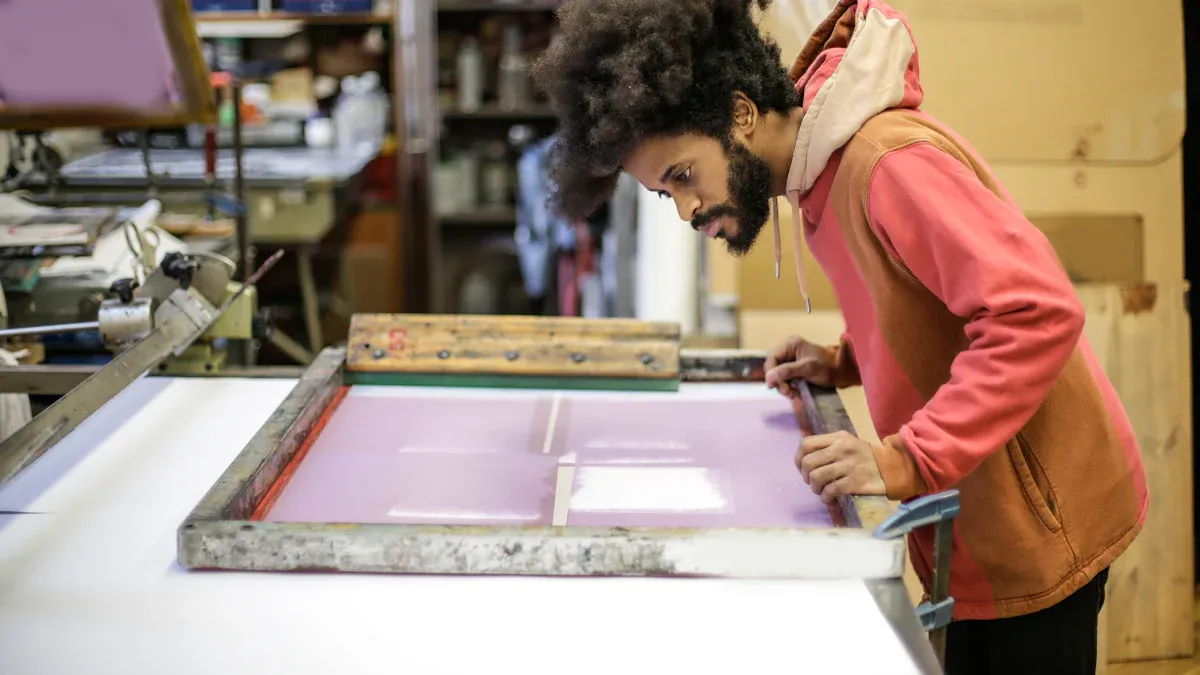
- Coat the screen with emulsion and expose under UV light.
- Wash out the screen to reveal the stencil.
- Align the shirt on the platen.
- Pull ink across with a squeegee.
- Cure the ink using a flash cure unit or dryer.
Always clean your screens to avoid residual ink.
What Do You Need to Start Screen Printing
To start screen printing, you’ll need:
- Blank garments (cotton or polyester t-shirts work best).
- Proper inks for your substrate.
- A press, screens, squeegees, and dryers.
- Business card, email, and website for branding.
- An efficient accounting system (e.g. QuickBooks, Wave).
Suppliers like Cnding offer wholesale pricing once you’re licensed.
How Profitable Is a Screen Printing Business
With the right setup, you can earn hundreds of dollars per hour printing t-shirts.
- A shirt costs ~$4–$6 to produce.
- You can sell it for $15–$25 or more.
- Cost per shirt drops with bulk orders.
- Profit margins of 50–70% are realistic.
Example: Printing 50 shirts/day at $10 profit = $500/day = $10k/month.
The key is controlling ink costs, labor, and waste.
How to Market Your Screen Printing Business
Marketing is essential to grow your business and reach potential customers.
Start With:
- Business website (try Wix or Squarespace).
- Social media accounts (Instagram, Facebook, TikTok).
- Local listings on Facebook Marketplace, Yelp, and Google Maps.
- Run paid ads or post videos of your printing process.
Build a Brand:
- Use your screen print designs to showcase your expertise.
- Offer bulk discounts or loyalty programs.
- Network with local schools, gyms, bands, and events.
- Showcase your work with hashtags and before/after images.
Tools to streamline:
- Hootsuite – manage your social media presence.
- HubSpot – CRM and marketing.
- Google Analytics – track visits and leads.
Running a Successful Screen Printing Business in 2025
To stay competitive in the printing industry this year:
- Automate where you can (e.g. automatic press, online orders).
- Offer multiple printing options (e.g. DTG, heat transfer, silk screen).
- Focus on screen printing services that solve real client needs (e.g. branded employee uniforms, merch for influencers).
- Maintain consistency – every print should meet the same standard.
Accounting, Pricing, and Inventory Management
- Use Xero, Wave, or QuickBooks to manage finances.
- Set your screen printing prices based on material, labor, and desired margins.
- Use Shopify, Printavo, or Teespring for e-commerce and inventory tracking.
- Keep all receipts—startup costs, ink purchases, rent—organized for taxes.
Pricing tip: Always factor in time, not just materials. Even a single color press job takes setup time.
Final Thoughts: Ready to Start Screen Printing
Starting a screen printing business takes grit, creativity, and strategy. But with the right tools that you need, knowledge, and consistency, it can become a profitable venture.
To recap, here’s what you need to start screen printing:
- A clear business plan.
- Legal setup and licenses.
- High-quality screen printing equipment.
- Marketing and branding essentials.
- An efficient production workflow.
- A focus on quality, speed, and customer service.
Stay sharp. Keep learning. Whether you’re using a mesh screen, emulsion, or upgrading to an automatic screen printing machine, always improve your craft.
Now is the perfect time to start a screen-printing business.
Ready to sell? Let your creativity shine—one shirt at a time.
- Why Start a Screen Printing Business
- Startup Costs to Start a Screen Printing Business
- Step-by-Step: Start a Screen Printing Business
- How to Screen Print: Step-by-Step for Beginners
- What Do You Need to Start Screen Printing
- How Profitable Is a Screen Printing Business
- How to Market Your Screen Printing Business
- Running a Successful Screen Printing Business in 2025
- Accounting, Pricing, and Inventory Management
- Final Thoughts: Ready to Start Screen Printing