


What is Serigraph Printing
Serigraph Printing is a printing technique where you use a mesh screen to transfer ink onto a surface, except in areas blocked by a stencil. You will find this method in both traditional art studios and modern manufacturing. Artists use it to create vivid, layered images. Today, many industries rely on it for high-quality prints on clothing, posters, and even electronics.
Serigraph Printing Basics
Definition and Terms
You will encounter several important terms when you learn about Serigraph Printing. These terms help you understand the process and the materials involved. Here are some of the most commonly used terms in the industry:
- Serigraphy: You use a mesh screen to transfer ink onto a surface. This method creates vibrant and detailed images. Many people also call this process screen printing.
- Giclée: You may see this term in art printing. It refers to high-quality digital prints. Giclée uses digital methods, not traditional screen printing.
- UV Special Effects: You can add unique finishes to prints using ultraviolet light. This technique cures inks and creates special effects that make your prints stand out.
You will notice that Serigraph Printing uses a stencil-based process. The screen material is often silk or nylon. You force ink through a fine screen to create the image. The artistic effects depend on how you apply the stencil and colors.
Here is a table that shows how Serigraph Printing compares to other screen printing methods:
| Feature | Serigraph Printing | Other Screen Printing Methods |
|---|---|---|
| Process | Stencil-based | Varies (may not be stencil-based) |
| Screen Material | Silk or nylon | Various materials |
| Ink Application | Forced through a fine screen | May use different techniques |
| Artistic Effects | Specific to stencil and color application | Varies based on method used |
Key Features
You will find several features that make Serigraph Printing unique. These features set it apart from other printing techniques and give you more control over the final result.
- Labor-intensive process: You need to prepare screens and apply ink by hand or with specialized equipment. This process requires attention to detail.
- Use of silk-screens: You work with fine mesh screens, often made of silk or nylon. These screens help you achieve sharp and vibrant prints.
- Color separation: You separate each color into its own screen. This step allows you to layer colors and create complex images.
- Artist’s involvement: You play a direct role in creating each print. Many artists prefer Serigraph Printing because it lets them control every step.
Tip: If you want to create prints with rich colors and sharp details, Serigraph Printing gives you the flexibility to experiment with different inks and effects.
You will see Serigraph Printing used in art studios, clothing factories, and even electronics manufacturing. The process allows you to produce high-quality prints on many surfaces, including fabric, paper, and plastic.
Serigraph Printing Process
Screen Preparation
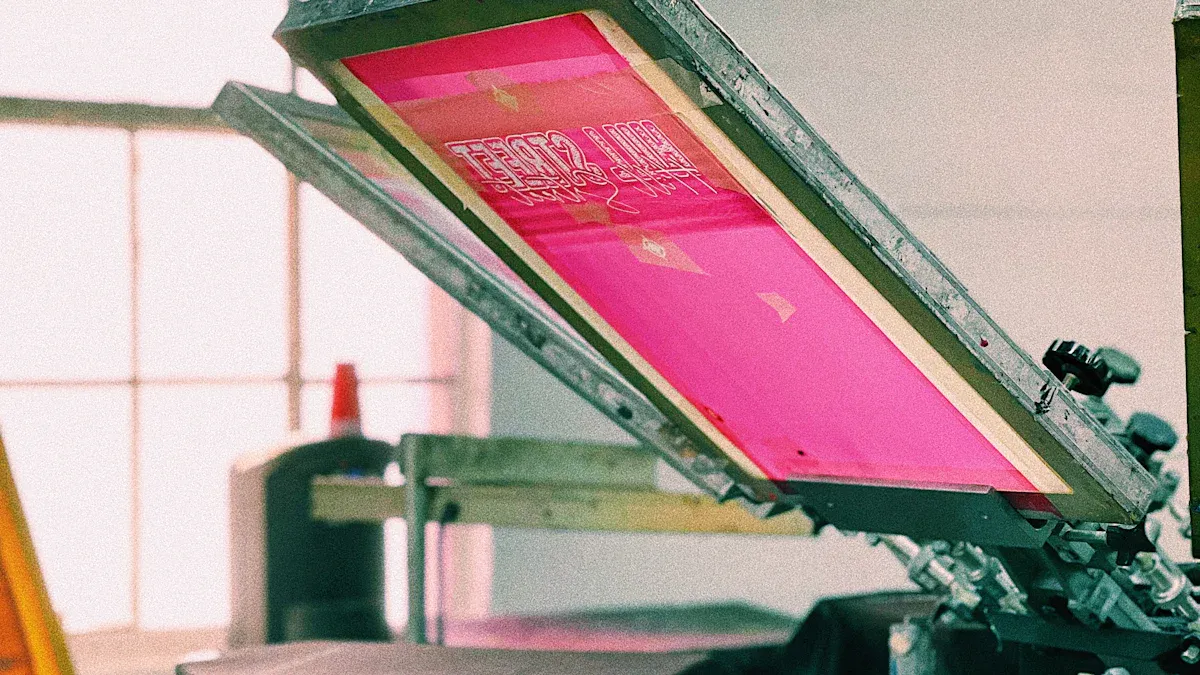
You start the Serigraph Printing process by preparing the screen. You select the right mesh count and emulsion type to match your design and ink. Mesh count refers to the number of threads per inch in the screen. A higher mesh count gives you finer detail, while a lower mesh count works better for thicker inks. For reflective prints, you should use a 32 T (80 Nylon) mesh. This mesh prevents clogging and improves reflectivity.
| Mesh Count | Recommendation | Effect on Print Quality |
|---|---|---|
| 32 T (80 Nylon) | Highly recommended | Prevents clogging with reflective particles, ensuring better reflectivity. |
You coat the screen with emulsion, which acts as a light-sensitive barrier. You expose the screen to light with your design, then wash away the unexposed emulsion. This step creates open areas where ink will pass through.
Tip: Always inspect your screen for dust or damage before you start. Clean screens help you achieve sharper prints.
Color Separation
You separate each color in your design onto its own screen. This step allows you to print vibrant, layered images. Digital technology now plays a big role in color separation. You use color management systems and RIP software to understand the color gamut and create accurate profiles for printers, inks, and fabrics. These tools help you reproduce the original design’s colors with precision.
You print each color layer one at a time, aligning the screens carefully. Proper alignment ensures that your final image looks crisp and professional.
Printing Steps
You begin printing by placing your substrate—such as fabric or paper—under the prepared screen. You pour ink onto the screen and use a squeegee to push the ink through the open areas. You repeat this process for each color layer.
Quality control is essential during printing. You should follow these steps:
- Pre-production checks: Inspect materials for quality, shrinkage, and color bleeding.
- In-process monitoring: Regularly check stitching, pattern alignment, and garment measurements.
- Final inspections: Review print quality, packaging, and labeling before finishing the product.
You can achieve consistent results by following these steps and using the right equipment. Serigraph Printing gives you control over every stage, from screen preparation to final inspection.
History and Evolution
Origins
You can trace the roots of serigraph printing back to ancient China, where artisans used silk mesh to transfer designs onto fabric. Over time, this technique spread to other parts of Asia and eventually reached Europe. As printing technologies advanced in the 18th century, you saw printed materials become more accessible to everyday people. This shift allowed artists and the public to engage with new images, including political and mythological themes. The rise of techniques like lithography and etching helped shape modern art movements and encouraged creative experimentation.
Development in Art
You will notice that serigraph printing gained popularity in the 20th century, especially among artists who wanted to explore new visual effects. Many famous figures contributed to its rise:
- Andy Warhol pioneered serigraph printing and worked with other artists, making the technique widely recognized.
- Mick Jagger appeared in Warhol’s iconic prints, showing how art and celebrity culture could intersect.
- Martha Graham became a subject in Warhol’s work, highlighting her impact on dance and culture.
- Joseph Beuys collaborated with Warhol, demonstrating the experimental side of serigraph printing.
These collaborations helped bring serigraph printing into galleries and popular culture, making it a respected art form.
Modern Innovations
You now see serigraph printing transformed by technology. Automation has changed how you approach the process. Machines can now handle tasks that once required careful manual work. This shift means you get faster production and more consistent results. Automation reduces human error and speeds up timelines, so you can produce high-quality prints more efficiently.
| Innovation Type | Description |
|---|---|
| Transition to Laser Technology | Enhanced printing accuracy and reduced operating costs through advanced laser stripping technology. |
| Water Jet Stripping Technology | Promises greater cost efficiency and sustainability in the printing process. |
| Comprehensive Machine Range | Covers every stage of the screen-printing process, ensuring high-quality outputs. |
Cnding plays a leading role in these advancements. With over 20 years of experience, Cnding develops automation equipment that boosts efficiency and quality. Their machines, like the H9PRO Series, help you achieve results that were once impossible with manual methods. You benefit from user-friendly interfaces, reliable performance, and strong after-sales support. As technology continues to evolve, you can expect serigraph printing to become even more accessible and innovative.
Serigraph Printing vs. Other Methods
Unique Advantages
When you compare serigraph printing to other methods, you notice several unique strengths. Serigraph printing stands out for its ability to produce bold, long-lasting colors, especially when you work with large quantities. You often see this method used for vibrant designs on clothing and posters. Digital printing, on the other hand, works best for small print runs and intricate designs. It offers a wide color range and high detail, making it ideal for on-demand production. Here are some key points to consider:
- Digital printing is more cost-effective for smaller print runs.
- Digital printing delivers superior quality for complex designs and a broad color palette.
- Serigraph printing becomes more economical as your order size increases.
- Serigraph printing uses bright, durable inks that last over time.
- Digital printing adapts easily to any order size.
You should choose serigraph printing when you need high-volume, durable prints with strong colors.
Artist Collaboration
Serigraph printing encourages collaboration among artists. You can join workshops led by experienced artists to learn new techniques and share ideas. These workshops create a space where you and other participants experiment with different screen printing methods. When you work together, you build skills and inspire each other. This interactive environment helps you grow as an artist and discover new creative possibilities.
- Workshops led by seasoned artists foster collaboration and learning.
- You get hands-on experience with various screen printing techniques.
- Sharing ideas in a group setting enhances your creative process.
Collectibility
Serigraph prints hold a special place in the art market because of their collectibility. Each serigraph is usually signed and numbered by the artist, which adds to its value. Limited editions make these prints exclusive and desirable. The reputation of the artist can also increase the worth of each piece. Handmade variations mean that every print is unique, which attracts collectors. Many people also appreciate the eco-friendly nature of serigraphy, as it aligns with sustainable art practices.
- Limited editions make serigraphs exclusive.
- The artist’s reputation boosts the value of each print.
- Handmade differences make every serigraph unique.
- Eco-friendly processes appeal to collectors who value sustainability.
You benefit from owning a piece of art that is both valuable and meaningful.
You see serigraph printing remains important in both art and industry. Automation and brands like Cnding help you achieve faster, higher-quality results. When you explore new solutions, you find options such as LED UV systems, digital printing machines, and 3D foiling machines. These innovations offer you high-quality output and faster turnaround times.
| Benefit | Description |
|---|---|
| Improved Efficiency | Automated systems speed up your production process. |
| Cost Reduction | You save on labor and increase your output. |
| Enhanced Print Quality | Machines deliver precise, vibrant prints. |
| Increased Applications | Automation lets you print on more materials for different industries. |
Consider adopting advanced technology to boost your printing capabilities and stay ahead in the market.
FAQs
What’s the most critical aspect of serigraph maintenance?
Daily cleaning and proper ink application are key to preserving screen life and ensuring consistent quality.
How often should screens be cleaned?
Daily for high-use environments, weekly for lighter use.
Can household cleaners be used on screens?
No, use only cleaners designed for serigraph screens to avoid damage.
When should a screen be replaced?
Replace screens showing tears, looseness, or declining print quality.
Is serigraph printing suitable for large-scale production?
Absolutely, especially with automated equipment like an oval screen printing machine for efficient, high-volume output.
Where can I source serigraph printing equipment and supplies?
Reach out to professional suppliers for screens, inks, and equipment tailored to your needs, or explore screen printing services for local options.