


Screen Tension in Screen Printing: Why It Matters
Screen tension serves as a foundational variable in the determination of screen printing outcomes. The differentiation becomes evident when print resolution is optimized and chromatic fidelity is maintained. The application of precise tension protocols facilitates superior print quality and enhances overall screen printing efficiency. A comprehensive understanding of tension mechanics grants practitioners greater empirical control over the final output. Historically, inconsistencies such as blurred boundaries or non-uniform ink distribution are frequently attributable to suboptimal screen tension.
The Significance of Screen Tension
Impact on Print Quality
The achievement of professional-grade, high-resolution prints is a primary objective in industrial applications. Screen tension is instrumental in this process; when the screen mesh is maintained at a high and uniform tension level, ink transfer occurs with maximum precision. This stability results in sharp edge definition and consistent color saturation. Conversely, insufficient or irregular tension introduces complications, including blurred line work, diminished detail resolution, or lateral ink migration beyond the intended design parameters.
Upon the observation of non-uniform ink distribution or ghosting effects, an immediate evaluation of screen tension is required, as these anomalies typically originate from tension deviations.
A properly tensioned screen further enables precise control over ink deposition. Maintaining the requisite volume of ink transfer across the entire production run ensures that chromatic brilliance and design integrity remain consistent from the initial substrate to the final unit. This mechanical consistency reduces the necessity for remedial actions or the correction of errors, thereby optimizing time management and minimizing the wastage of ink and raw materials.
Role in Multi-Color Registration
Multi-color printing processes necessitate that each individual color station aligns with exacting precision, a state referred to as registration. Should screen tension fluctuate during the production cycle, chromatic shifts may occur, leading to misaligned architectural elements within the design and resulting in significant product spoilage.
The correlation between specific mechanical features and registration accuracy is delineated in the table below:
| Feature | Impact on Screen Printing |
|---|---|
| Accelerated tensioning | Mitigates the risk of filament degradation |
| Enhanced fabric resilience | Improves structural durability and stability |
| Rapid tension stabilization | Maintains equilibrium during high-speed runs |
| Elevated tension threshold | Facilitates superior control over force levels |
| Minimal tension attenuation | Ensures heightened registration reliability |
| Optimized turnaround cycles | Increases throughput from preparation to press |
| Superior registration | Realized through sustained tension stability |
The utilization of screens characterized by stable tension ensures that all color layers remain in perfect alignment. This prevents registration deviations and maintains a seamless operational workflow. High-performance machinery, such as the systems engineered by cnding, is designed to preserve this mechanical stability, yielding enhanced results and increased operational efficiency across diverse print mandates.
Defining Screen Tension
Definition and Measurement Parameters
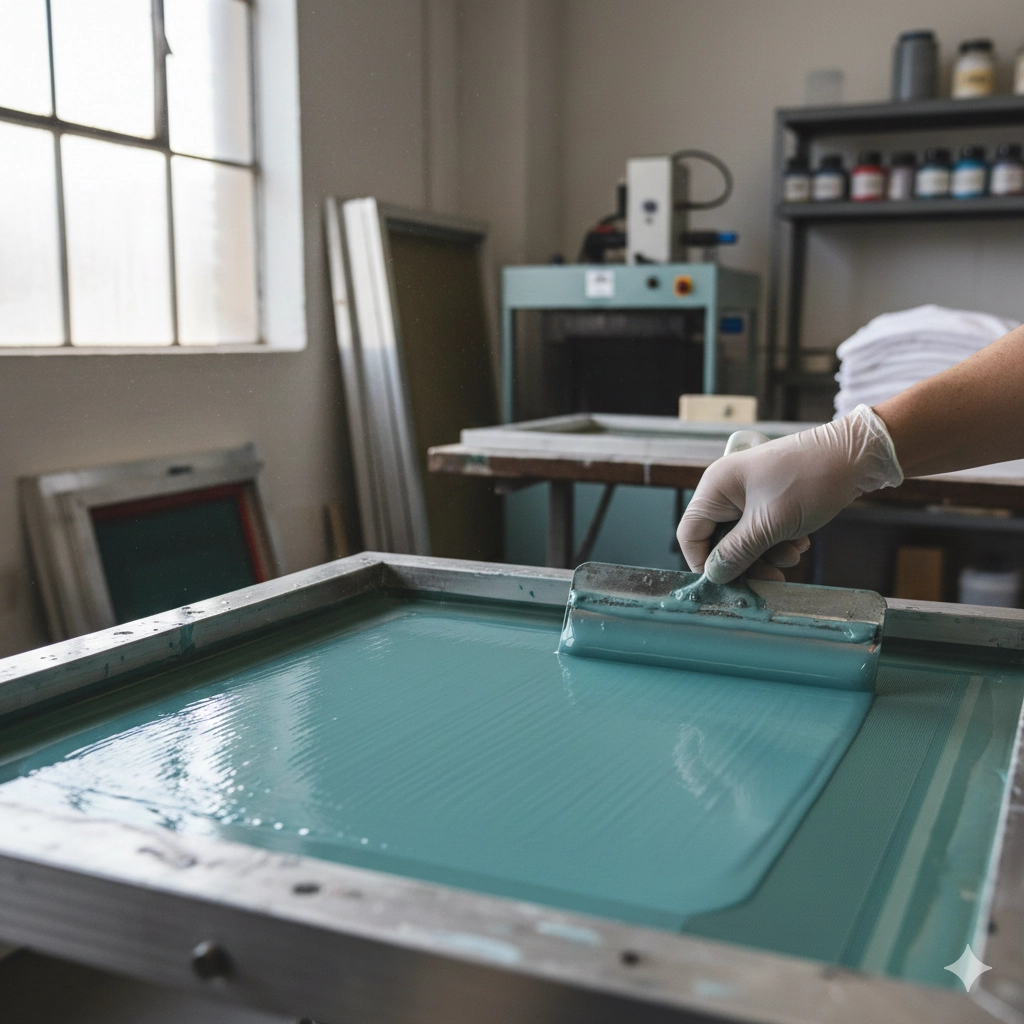
Screen tension is defined as the measure of force applied when stretching the mesh substrate across the frame. It is essential that the mesh remains planar and uniform to facilitate precision printing in every instance. Inadequate stretching results in diminished edge clarity and irregular ink transfer, whereas excessive force poses a risk of catastrophic failure to the mesh or frame structural integrity.
Screen tension is quantified through the use of specialized metrology tools, which provide empirical data to validate the readiness of a screen for production.
Optimal Tension Thresholds
It is necessary to maintain screen tension within specific calibrated ranges. Industrial standards typically specify 20 to 35 Newtons per centimeter (N/cm) for textile applications. The precise value is contingent upon the mesh material composition and the rheological properties of the ink being utilized.
Various mesh materials exhibit distinct responses to applied force. Polyester mesh is characterized by its ability to withstand high tension while remaining cost-effective and lightweight. Stainless steel mesh is utilized for moderate tension applications, offering increased mass and specialized durability at a higher price point. Comparative material properties are detailed below:
| Material | Tension Response | Mass Density | Unit Cost |
|---|---|---|---|
| Polyester | High tension | Low mass | Economical |
| Stainless Steel | Moderate tension | High mass | Premium |
Tension levels must be meticulously matched to the specific mesh classification. Polyester is suitable for the majority of textile requirements, while stainless steel is reserved for specialized projects necessitating uncompromising durability. Adherence to ideal tension ranges ensures the production of high-definition prints and extends the operational lifespan of the screens.
Screen Tension and Operational Efficiency
Uniformity of Ink Deposition
The standardization of print quality throughout the duration of a production run is a critical operational goal. Uniform ink deposition is essential to this objective. When screen tension is held constant, the mesh remains planar and rigid, allowing the squeegee to facilitate an even distribution of ink through the apertures. This prevents the formation of localized variations in ink thickness, ensuring that every unit exhibits identical color intensity and detail resolution.
A reduction in screen tension often manifests as non-uniform ink application, where certain design elements appear attenuated while others exhibit excessive saturation. Such inconsistencies necessitate time-consuming corrections and lead to the excessive consumption of ink and substrates. Periodic tension validation serves to preserve resources and maintain the aesthetic integrity of the output.
Implementing a protocol to verify screen tension via a calibrated meter prior to every production cycle can significantly enhance screen printing efficiency and reduce material waste.
Optimized Snap-Off and Attenuation of Smearing
A high-tension, uniform screen facilitates a rapid return to its original position following the passage of the squeegee, a mechanical action known as “snap-off.” Efficient snap-off ensures that the mesh separates cleanly from the substrate, preserving crisp boundaries and fine details. Conversely, sluggish or irregular snap-off may induce smearing or the formation of ghost images, where ink extends beyond the intended geometric constraints.
Precise screen tension protocols effectively neutralize these issues, reducing the time required for error remediation and accelerating the transition between individual prints. This mechanical speed enhances total output and assists in the fulfillment of rigorous delivery schedules. Maintaining screens in optimal condition results in a higher yield of finished products and a lower rejection rate.
- Rapid snap-off = minimized smearing
- Uniform tension = optimized resolution
- Error reduction = maximized screen printing efficiency
Integration of Cnding Technology for Efficiency
The attainment of superior production standards is contingent upon the utilization of specialized equipment. Cnding provides sophisticated machinery engineered to maintain precise screen tension and maximize screen printing efficiency.
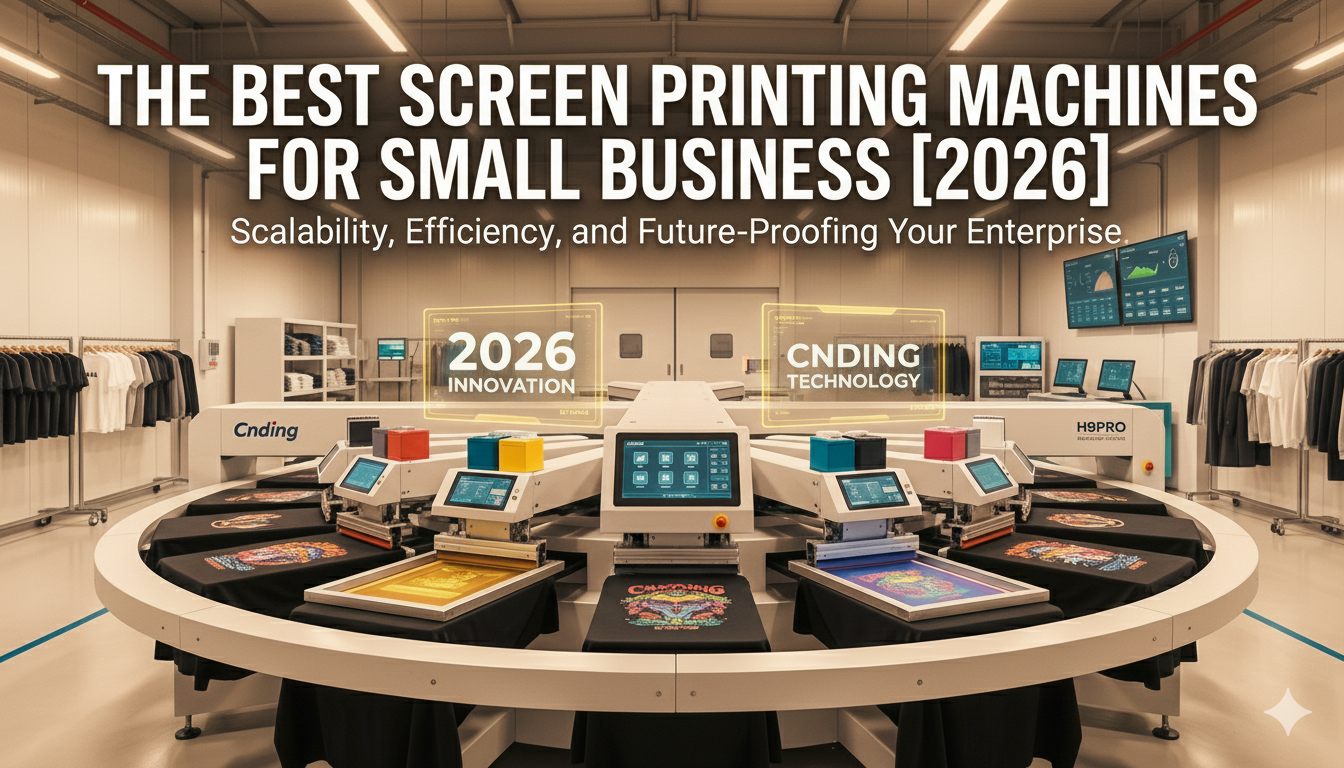
- The H9PRO Series Full-Servo Oval Printing Machine incorporates a dual-servo motor architecture, facilitating precise 360° control over the print head. This ensures tension stability throughout extended production durations. The integrated touchscreen interface allows for seamless monitoring and adjustment, enabling throughput of up to 700 units per hour with standardized quality.
- The H8 Frequency Conversion Silk Printing Machine utilizes a split-design framework, isolating the movement of the screen frame from the squeegee mechanism. This architecture prevents chromatic misalignment and preserves balanced tension. Its military-grade aluminum-magnesium alloy platform ensures planarity at high velocities, achieving speeds of up to 600 units per hour with optimized energy consumption.
- The Cnding NB Plus Oval Screen Printer Machine leverages intelligent servo drives and AC variable-frequency motors to provide uncompromising registration accuracy and tension stability. A quick-release system facilitates rapid pallet changes, ensuring a fluid workflow and supporting a capacity of up to 770 units per hour in a 16-color configuration.
These technological solutions assist in the reduction of waste, the optimization of time, and the delivery of consistent results. Maintenance and setup requirements are significantly reduced, as are print-related anomalies. Through the adoption of cnding technology, organizations can focus on market expansion and the fulfillment of client requirements.
Investment in high-performance screen printing equipment yields significant returns in the form of enhanced screen printing efficiency and superior output quality.
Manifestations of Suboptimal Tension
Off-Contact Dynamics and Print Anomalies
Several indicators signify a degradation in screen tension. Prints may exhibit blurring or smudging, and ink may migrate beyond established design boundaries. Furthermore, non-uniform coverage or faded regions may occur. These anomalies are frequently the result of improper off-contact, where the mesh fails to lift cleanly from the substrate post-deposition. Mesh sagging prevents the squeegee from maintaining uniform pressure, leading to inconsistent output and material loss.
The following common print anomalies are frequently linked to inadequate tension:
- Blurred edge definition
- Ink smearing and lateral migration
- Ghosting or dual-image artifacts
- Inconsistent ink deposition volumes
A systematic check of screen tension prior to production serves to identify potential anomalies at an early stage, thereby optimizing the screen printing workflow.
Cnding machinery, including the H9PRO Series and the NB Plus Oval Screen Printer, utilizes advanced servo-mechanical systems to ensure tension stability and rapid snap-off, resulting in higher resolution and a reduction in rejected units.
Stencil and Mesh Degradation
The impact of poor tension extends to the structural components of the printing system. Stencil breakdown may occur, characterized by the delamination or cracking of the emulsion. Furthermore, mesh substrates may undergo permanent deformation or warping, leading to chronic registration errors. Frequent stencil failure or mesh damage is typically indicative of tension-related stress.
| Symptom | Probable Cause | Corrective Action |
|---|---|---|
| Stencil delamination | Low mesh tension | Re-tension or replace mesh |
| Mesh deformation | Irregular tension | Utilize tension meter; adjust frame |
| Registration error | Mesh displacement | Transition to servo-driven systems |
The troubleshooting of these issues begins with the implementation of regular tension audits. Utilizing a tension meter to inspect all screens prior to a run is essential. Cnding’s equipment, featuring intelligent control systems and high-durability platforms, assists in the maintenance of optimal tension and the minimization of operational downtime.
Commitment to reliable equipment and standardized maintenance protocols preserves screen integrity and safeguards the production workflow.
Methodologies for Achieving and Sustaining Tension
Industrial Best Practices
The attainment of optimal screen tension is facilitated by adherence to standardized procedures. It is essential to utilize high-quality mesh and frame components, as these materials exhibit superior tension retention and longevity. Mesh must be stretched with absolute uniformity across the frame; any irregularity will inevitably lead to print anomalies and material wastage.
Verification of tension using a calibrated meter is required before every production run to facilitate early detection of mechanical drift. Post-production cleaning is vital, as the accumulation of residual ink and contaminants can adversely affect both tension and print resolution. Furthermore, screens must be stored in climate-controlled environments to prevent mesh loosening or warping induced by thermal or hygroscopic fluctuations.
The following represents a standardized checklist for tension maintenance:
- Utilization of premium mesh and frame substrates
- Execution of uniform mesh stretching protocols
- Empirical measurement of tension prior to printing
- Systematic post-production screen cleaning
- Adherence to climate-controlled storage standards
Screens exhibiting signs of structural fatigue or permanent deformation should be decommissioned, as compromised tension directly correlates with reduced screen printing efficiency.
Cnding Engineering Solutions
The management of tension is streamlined through the integration of advanced Cnding equipment. The H9PRO Series Full-Servo Oval Printing Machine employs a dual-servo architecture to maintain tension equilibrium during high-volume production cycles, ensuring standardized results.
The H8 Frequency Conversion Silk Printing Machine utilizes a split-frame design to isolate mechanical forces, thereby preventing tension attenuation and preserving image sharpness. Additionally, the Cnding NB Plus Oval Screen Printer Machine provides intelligent servo drives and quick-release mechanisms, allowing for rapid screen adjustment and the maintenance of a fluid workflow.
Cnding systems are equipped with intuitive interfaces, enabling operators to monitor tension parameters and execute adjustments with precision. these features are instrumental in sustaining high levels of screen printing efficiency and delivering superior print quality consistently.
The integration of reliable machinery and standardized methodologies ensures that screen assets remain in peak condition, thereby maximizing organizational productivity.
Screen tension is a primary determinant of print quality and a significant driver of operational efficiency. Maintaining tension within established parameters effectively reduces waste and ensures repeatable results. The following protocols should be prioritized:
- Mandatory tension verification prior to production
- Selection of high-grade mesh and frame components
- Standardized cleaning and storage procedures
Cnding’s sophisticated machinery facilitates effortless tension management, resulting in superior resolution and optimized production cycles. Further technical information is available at cndinggroup.com.