


Inks, Screens, and Emulsions: A Price Guide for Screen Printing Startups
You’re at the starting line. Your head is full of designs, your brand has a name, and you can practically smell the ink and feel the hum of the flash dryer. It’s an exciting place to be. But it’s also where the dream meets the spreadsheet.
Most people budget for the big stuff—the press, the dryer, the exposure unit. But I’ve seen too many passionate founders stumble because they misjudged the small stuff. The things you buy over and over again.
We’re talking about your ink, your screens, and your emulsion.
These aren’t just line items on a supplier invoice; they are the fundamental choices that dictate your daily workflow, the quality of your final product, and the health of your bank account. Getting this right from day one isn’t just smart—it’s survival.
Let’s cut through the noise. Here’s what you actually need to know.
Your First Big Decision: The Ink
The ink you choose defines the character of your prints. It’s the difference between a loud, vibrant graphic on a band tee and a soft, breathable print on a boutique shirt. There are two paths you can take.
Path #1: Plastisol — The Forgiving Workhorse
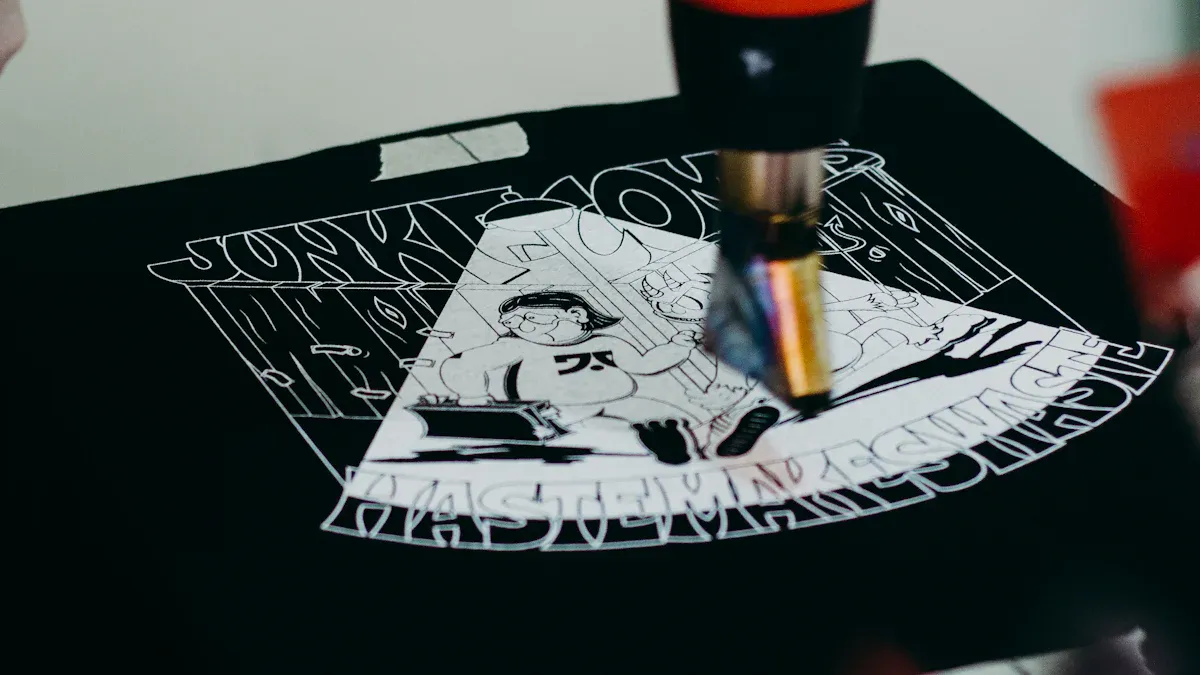
If you walk into nine out of ten print shops, you’ll find buckets of plastisol ink. Why? Because it’s reliable. It’s a plastic-based ink that will not dry in your screen while you’re figuring out your process, answering the phone, or grabbing a coffee. For a beginner, this is a safety net that saves you from the panic of a clogged screen. It’s bright, opaque on dark shirts, and it just works.
The trade-off is the “hand,” or the feel of the print. It sits on top of the fabric, which you can definitely feel.
Path #2: Water-Based — The Soft-Touch Specialist
This is the ink behind those premium shirts that feel like the design is part of the fabric itself. Water-based ink soaks into the fibers, creating a print you often can’t feel at all. The cleanup is a dream (just water), and it’s a more sustainable choice.
The catch? It behaves like water. It starts to evaporate and dry the second it hits the screen. Work too slow, and your design is toast. It’s also more expensive and can be a challenge to get bright on dark garments.
Start with plastisol. Master your craft with an ink that forgives your mistakes. A simple starter set of plastisol (white, black, red, blue, yellow) will cost you around $125 for quart-sized tubs and will prevent countless headaches.
The One Place You Shouldn’t Try to Save Money: Your Screens
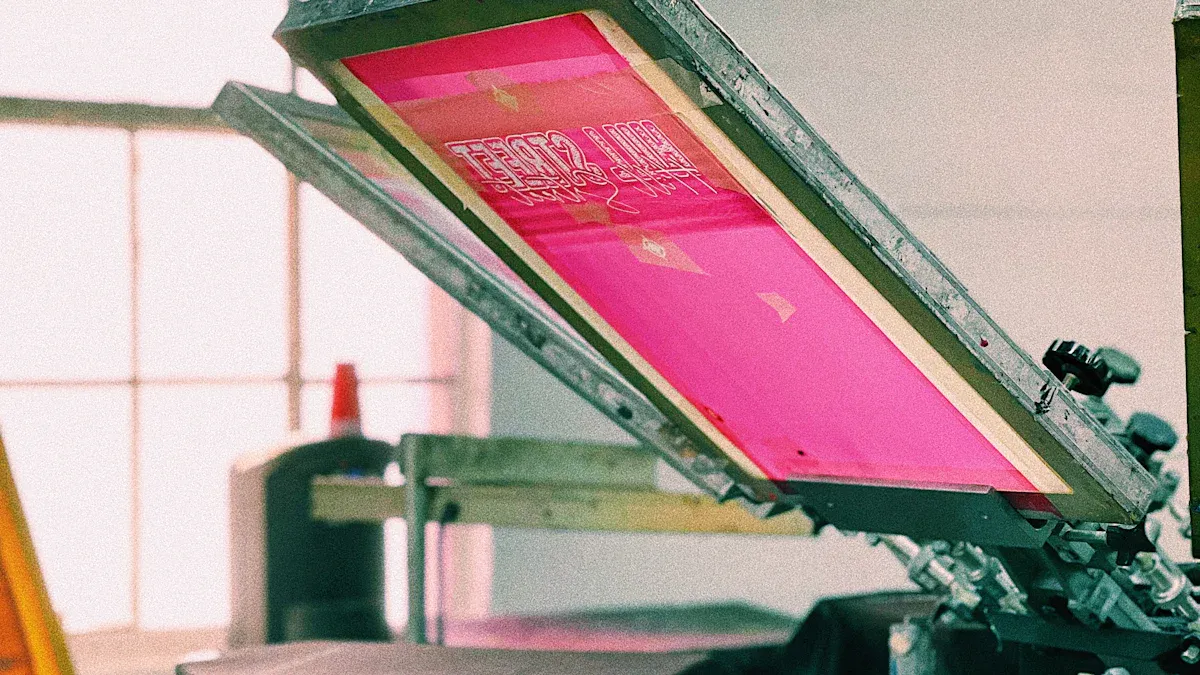
A screen is just a metal or wood frame with mesh stretched over it. Simple, right? But the choice between wood and aluminum is one of the most critical decisions a new printer can make.
New printers often see the price tag on a wooden screen (about $18) versus an aluminum one ($25+) and think they’ve found an easy way to save.
This is a classic rookie mistake.
A wooden frame will inevitably meet water during the screen cleaning process. And what happens to wood when it gets wet over and over? It warps. Even a tiny, imperceptible twist in the frame will ruin the mesh tension, making your prints blurry and inconsistent. You’ll spend hours trying to figure out what’s wrong with your technique, when the problem is the cheap tool in your hands.
Aluminum frames are an investment in sanity. They will never warp. They hold perfect tension for years, delivering crisp, repeatable results every single time.
Pay the extra $7-$10 per screen for aluminum. Trust me, the first time you don’t have to throw away a batch of misprinted shirts, you will have already earned that money back. For a starting inventory, four aluminum screens (two with 110 mesh for bold art, two with 160 mesh for general detail) will run you about $120.
The Unsung Hero of Your Darkroom: Emulsion
Emulsion is the light-sensitive goo you coat your screen with to create your stencil. It feels technical and intimidating, but the choice is actually quite simple. It boils down to a trade-off between ease-of-use and speed.
On one end, you have Diazo emulsion. It’s cheaper, you have to mix it yourself, and it takes longer to expose your screen. Its superpower? It’s incredibly forgiving. If your exposure time is off by a minute or two, you can usually still get a perfectly usable screen.
On the other end is Photopolymer emulsion. It’s more expensive, comes ready-to-use, and exposes in a fraction of the time. It captures insane detail but is very picky. If your exposure time isn’t dialed in precisely, you’ll be left with a slimy mess.
So, what’s the move?
You take the middle path. Dual-cure emulsion is a hybrid that gives you the best of both worlds. It offers great detail like a photopolymer but with much of the forgiveness of a Diazo.
For a new shop, a quart of dual-cure emulsion is the smartest money you can spend. It will produce professional-quality stencils while giving you the breathing room you need to perfect your process. A quart will cost about $55 and will coat dozens of screens.
Your Smart Starter Shopping List
Let’s skip the guesswork. If you were walking into a supplier today, here is the lean, professional, no-regrets purchase list for your initial consumable stock:
- Ink: A plastisol starter set (quarts of essential colors) ≈ $125
- Screens: 4 professional aluminum frames (20″x24″) ≈ $120
- Emulsion: 1 quart of a reliable dual-cure emulsion ≈ $55
For a grand total of around $300, you are equipped not with the cheapest materials, but with the right materials. You’re building your business on a foundation of reliability, which frees you up to focus on what really matters: honing your craft and creating amazing products.
Don’t learn these lessons the hard way. Invest smartly upfront, and you’ll be well on your way.