


How to Set Up a Successful Screen Printing Shop in Your Garage
Establishing a professional screen printing operation within a residential garage is a viable enterprise for emerging entrepreneurs. Statistics indicate that a significant portion of small businesses in the United States originate within a home environment, with approximately 50% utilizing garage spaces as primary incubators.
The global screen printing sector continues to demonstrate robust expansion, valued at over $847 million in 2023 and projected to reach a valuation of $1.5 billion by 2032. The availability of advanced industrial solutions, such as those provided by Cnding, facilitates the entry of new market participants into this competitive landscape.
Essential Equipment for Your Screen Printing Shop
The successful configuration of a garage-based screen printing facility is predicated upon the acquisition of appropriate industrial equipment. Selecting high-specification tools is critical for ensuring production fluidity and mitigating operational downtime. The following sections outline the fundamental requirements for both nascent and scaling enterprises.
Choosing the Right Screen Printing Machine
The central component of any screen printing facility is the press. These systems range in complexity from entry-level manual units to sophisticated automated configurations.
Manual presses are suitable for short-run production and fundamental skill development. Conversely, semi-automatic and fully automatic systems are engineered for high-volume output and rigorous consistency. Equipment selection should be guided by budgetary constraints, projected production quotas, and spatial dimensions.
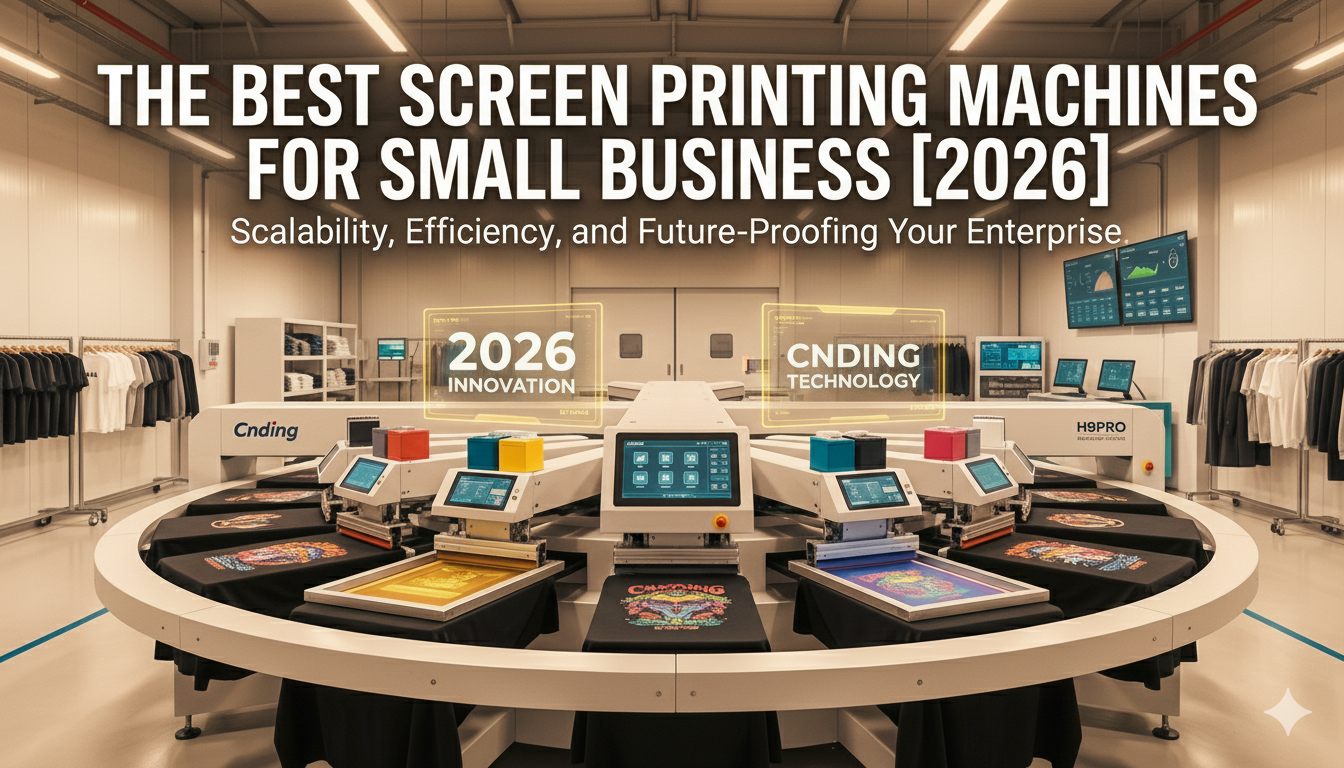
Professional operators prioritize features such as precision registration, energy efficiency, and intuitive interfaces. For enterprises requiring industrial-grade performance, equipment such as Cnding’s CE Approved H9PRO Series Full-Servo Oval Printing Machine and the NB Plus Oval Screen Printer Machine represent the industry standard. These models utilize advanced full-servo control systems to ensure high-fidelity precision, independent print head management for intricate designs, and energy consumption reductions of up to 30%. The H9PRO utilizes a dual servo motor architecture, a sophisticated touchscreen interface, and aerospace-grade aluminum pallets to maintain structural stability. The NB Plus model offers superior registration accuracy and modular scalability, facilitating business expansion.
The following table provides a technical comparison of key attributes:
| Feature | Cnding H9PRO | Alternative Models (e.g., NB Plus) |
|---|---|---|
| Motor System | Dual servo motor system | Standard motor system |
| Print Head Control | Independent control | Dependent control |
| Production Rate | Standardized | High-Output |
| Energy Efficiency | Up to 30% reduction | Not specified |
| Certification | ISO9001 and CE certified | Variable |
| Patented Technologies | 38 proprietary patents | Limited patents |
Must-Have Supplies and Accessories
Comprehensive operational readiness requires a diverse inventory of consumables and accessories. Maintaining high-quality supplies is essential for consistent production.
- Inks: Common formulations include plastisol, graphic, and water-based inks, each selected based on substrate composition and desired aesthetic outcomes.
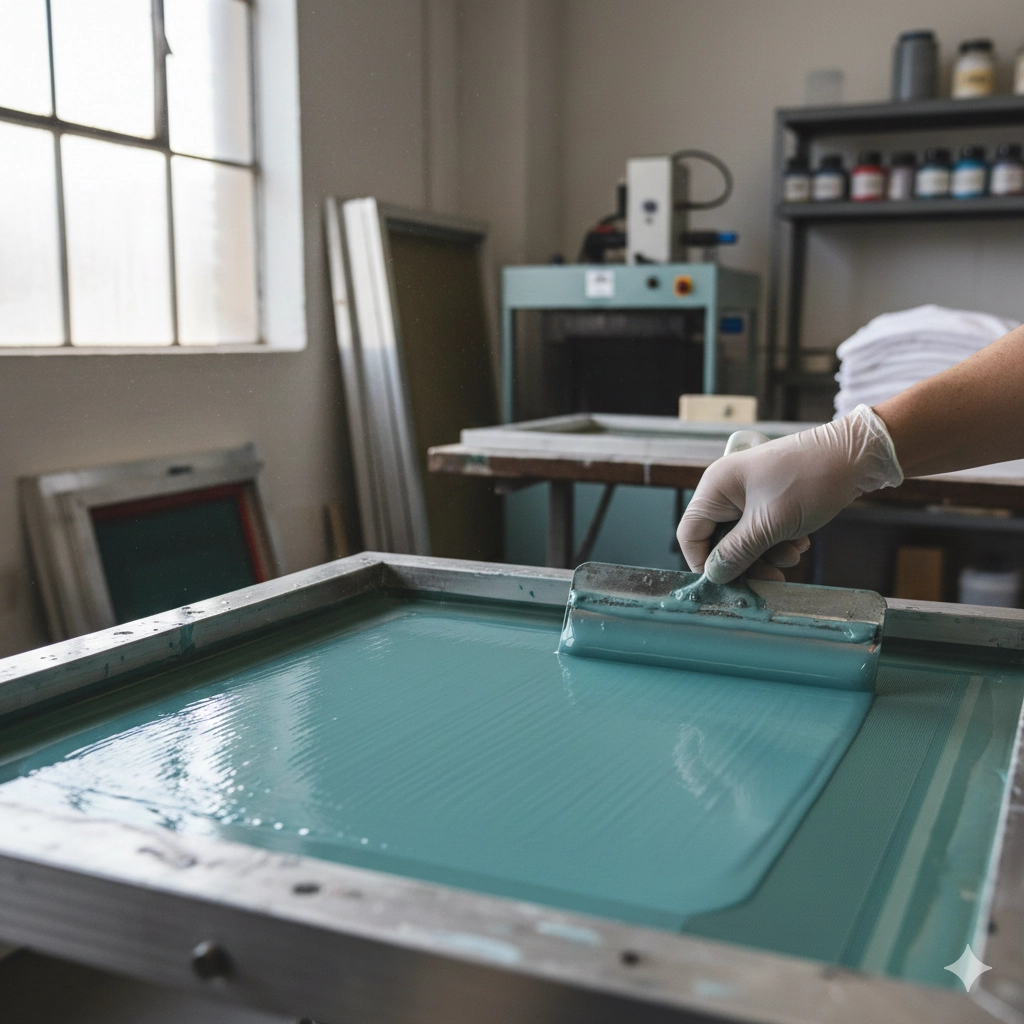
- Emulsions: High-quality emulsions are fundamental to the creation of sharp, durable stencils. Selection criteria should include image resolution requirements, ink compatibility, light source specifications, and environmental variables.
- Screens & Mesh: Superior mesh quality is vital for achieving high-definition prints. Mesh counts must be calibrated to the specific detail level of the design.
- Squeegees: These instruments facilitate ink transfer. Blade geometry and durometer (hardness) levels must be selected according to specific printing techniques.
- Curing Systems: Conveyor dryers provide rapid, uniform curing, whereas flash dryers are appropriate for smaller footprints or specialized spot curing.
- Exposure Units: These systems facilitate stencil production by exposing emulsion-coated screens to ultraviolet light. Equipment must be compatible with screen dimensions and production volume.
- Adhesives & Tapes: Specialized tapes are utilized for screen masking, while industrial adhesives ensure garment stability during the printing cycle.
- Reclamation Chemicals: Rigorous cleaning protocols utilizing professional-grade chemicals are necessary for equipment maintenance.
- Storage Solutions: Specialized racks and carts facilitate systematic organization of screens and inks, ensuring an efficient workspace.
The implementation of precise application techniques for emulsions and inks is mandatory for achieving high-resolution, durable prints. Operators are encouraged to standardize these methodologies to ensure optimal results.
Capital expenditure for supplies varies significantly. While manual configurations involve lower initial costs, automated systems and specialized accessories require substantial investment. Prioritizing premium supplies yields superior output quality and enhanced operational reliability.
Garage Layout Planning
Workflow Optimization
A strategically organized facility is paramount for operational efficiency. Industry professionals typically implement a zonal configuration, segregating the workspace into specialized areas for printing, substrate/ink storage, and screen reclamation. This methodology optimizes workflow and minimizes environmental clutter. The integration of modular storage systems and mobile units enhances flexibility, while vertical shelving maximizes spatial utilization.
| Best Practice | Description |
|---|---|
| Modular Systems | Integrated designs featuring secure storage and workstations |
| Zone-Based Organization | Functional segregation of the facility for efficient access |
| Mobile Storage Solutions | Casters and wheeled units for dynamic supply positioning |
| Vertical Space Optimization | Wall-mounted racks and shelving to maximize floor area |
| Transparent Inventory Systems | Clear containers to facilitate immediate visual identification |
| Asset Management Protocols | Systematic cataloging of tools to optimize workflow |
Accurate spatial measurements must be conducted prior to the acquisition of storage infrastructure to ensure each component has a dedicated, efficient location.
Space-Saving Storage Solutions
In constrained garage environments, smart storage is critical. Stackable cabinetry and shelving units utilize vertical capacity without infringing upon the primary workspace. Wall-mounted systems, such as pegboards, are utilized for organizing hand tools, while overhead tracks are employed for the storage of bulky screens. Folding workstations and mobile carts provide multi-functional utility.
| Storage Solution | Technical Description |
|---|---|
| Vertical Integration | Stackable units to maximize storage density |
| Wall-Mounted Configurations | Pegboards and slat walls for versatile tool organization |
| Overhead Tracking Systems | Ceiling-mounted hardware for off-floor screen storage |
| Collapsible Workstations | Folding tables designed for multi-purpose operational use |
| Industrial Rolling Carts | Heavy-duty mobile units for substrate and supply transport |
| Systematic Inventory Audits | Frequent reorganization to optimize space and stock levels |
Electrical and Ventilation Setup
Screen printing hardware requires a stable and robust power supply. Industrial dryers and presses necessitate dedicated circuits to prevent voltage fluctuations and circuit interruptions. It is imperative to validate the electrical capacity of the facility prior to equipment installation. Furthermore, comprehensive ventilation is required to maintain air quality standards. Options include wall-mounted extraction units, ceiling-integrated systems for larger volumes, or portable filtration units for smaller footprints.
Consistent curing results are contingent upon a stable power supply. Adequate ventilation is essential for operator safety and the mitigation of chemical vapors.
Darkroom Setup
The establishment of a functional darkroom is critical for the production of high-resolution stencils. Structured planning of this environment ensures both output quality and operational safety.
Lightproofing Your Space
Uncontrolled light exposure can compromise screen integrity. To ensure total lightproofing, operators should implement the following measures:
- Installation of industrial blackout curtains or specialized blinds over all apertures.
- Utilization of heavy-duty lumber door stops to eliminate light gaps.
- Application of felt weatherstripping around door frames to create light-trapping right angles.
- Integration of oak thresholds and bottom-door weatherstripping for complete seal integrity.
The application of felt weatherstripping to the door face creates the necessary right-angle barriers that prevent light ingress. Since light travels in linear paths, creating complex angles is the primary method for ensuring a light-tight environment.
These modifications transform a standard garage area into a professional-grade exposure chamber.
Safe Chemical Storage
The screen printing process involves chemicals that necessitate rigorous handling protocols. Operators must adhere to the following safety standards:
- Maintain all solutions in standardized, stable, and clearly labeled containers.
- Utilize appropriate Personal Protective Equipment (PPE), including ANSI-approved eyewear, chemical-resistant gloves, and protective aprons.
- Prioritize liquid formulations where possible, utilizing specialized enclosures for the mixing of powders.
- Adhere to the safety protocol of adding acid to water (never the reverse).
- Position concentrated acids on lower shelving units to minimize the impact of potential spills.
- Ensure all hazardous materials are secured and inaccessible to unauthorized individuals.
Ventilation for Darkroom
Maintaining air quality within the darkroom is essential. A recommended configuration involves placing an exhaust intake adjacent to chemical workstations and an intake louver on the opposing wall to facilitate cross-room airflow. Industry standards recommend a minimum of five air volume changes per hour to ensure the effective removal of fumes and the maintenance of a safe working environment.
Organization and Cleanliness
Storage for Screens and Squeegees
An organized workspace is fundamental to operational safety and throughput. It is standard practice to implement structured organizational systems for all inventory. Vertical racks are utilized for screen storage to prevent damage and facilitate rapid retrieval. Squeegees should be categorized in labeled bins. High-efficiency shops often utilize job-based or numerical indexing for screens and inks to ensure immediate accessibility.
- Assign dedicated zones for screens, squeegees, pigments, and reclamation chemicals.
- Implement vertical storage solutions to maximize available floor space.
- Index screens according to job specifications or chronological order.
- Position high-frequency tools within the immediate ergonomic reach of the operator.
- Standardize organizational protocols across all staff members.
Detailed labeling of all storage units is required to maintain system integrity.
Cleaning Routines
Regular maintenance is necessary to preserve equipment longevity and ensure print fidelity. A structured maintenance schedule prevents mechanical failure.
- Post-operational cleaning of squeegees using appropriate mild solvents.
- Rigorous inspection and cleaning of the platen, including residue removal and the application of protective coatings.
- Periodic lubrication of mechanical interfaces, including hinges and bearings.
- Standardized reassembly and storage in a climate-controlled environment.
Waste Disposal
Compliance with local and state environmental regulations regarding the disposal of hazardous waste is mandatory. Enterprises must also adhere to wastewater standards, which typically regulate pH levels and heavy metal concentrations. Ethical disposal practices are essential for communal and environmental safety.
Direct consultation with local regulatory bodies is required prior to the disposal of chemical waste or the discharge of screen reclamation fluids.
Environmental Management
Temperature and Humidity Control
Optimal screen printing results are contingent upon a controlled environmental climate. Professionals monitor these variables closely, as inks and emulsions are sensitive to atmospheric changes. Excessive heat or humidity can lead to print blurring or adhesion issues, while low humidity may cause premature screen drying and cracking.
Recommended environmental parameters for screen printing:
- Optimal Temperature: 68–70°F
- Functional Range: 55–80°F
- Ideal Relative Humidity: 50%
- Functional Range: 30–70%
The use of digital hygrometers and thermometers is standard practice. Environmental stability is maintained through the use of portable HVAC units and industrial dehumidifiers.
Climate monitoring devices should be positioned in the immediate vicinity of the printing station to ensure accurate data for ink and emulsion performance.
Air Quality Solutions
In a production environment, the accumulation of particulates and chemical vapors must be managed. High air quality is necessary for both personnel health and the prevention of print contamination.
Common air filtration implementations include:
| System Type | Functional Attributes | Regulatory Compliance |
|---|---|---|
| Dust Collectors | High-efficiency particulate removal with a minimal footprint | Adheres to regulatory guidelines |
| Fume Extractors | Direct source capture of airborne chemical contaminants | Ensures health and safety compliance |
| Downdraft Tables | Integrated suction for chemical handling and reclamation | Meets industrial safety standards |
Fume extraction should be localized to the press and ink-mixing zones, while dust collection is utilized to maintain screen purity.
Safety and Insurance
Fire Safety
Fire safety is a critical operational priority. Hazardous materials must be stored in fire-rated containers away from thermal sources. Electrical systems must be managed to avoid overloading circuits, and the facility must remain free of combustible clutter. The integration of smoke detection and heat-sensing systems is a vital safety requirement.
| Hazard Category | Mitigation Strategy |
|---|---|
| Flammable Materials | Storage in compliant containers isolated from heat. |
| Mechanical Risks | Regular maintenance of vehicles and equipment to prevent leaks. |
| Electrical Overload | Load distribution across multiple dedicated circuits. |
| Combustible Accumulation | Implementation of rigorous organizational and cleaning standards. |
| Atmospheric Safety | Installation of smoke and heat detectors. |
Smoke detection systems should be tested monthly, and certified fire extinguishers must be placed in accessible locations.
Personal Protective Equipment
The utilization of PPE is mandatory to mitigate risks associated with chemical exposure.
- Chemical-resistant gloves
- Respirators or high-grade facemasks (especially for aerosols)
- ANSI-rated safety eyewear or face shields
- Protective aprons
Insurance for Home-Based Shops
Comprehensive insurance coverage is essential for mitigating business risk. Several specialized policies are applicable to home-based screen printing operations:
| Policy Type | Coverage Scope |
|---|---|
| General Liability | Protection against third-party injury and property damage. |
| Workers’ Compensation | Coverage for employee medical costs and related litigation. |
| Business Owner’s Policy (BOP) | Integrated liability and property protection. |
| Errors and Omissions (E&O) | Protection against claims of production errors or delays. |
| Cyber Insurance | Mitigation of risks associated with data breaches. |
| Commercial Auto | Coverage for vehicles utilized for business operations. |
Insurance premiums are determined by the scale of the operation and the scope of services provided. Many providers offer home-business endorsements to existing residential policies, providing an economical method for increasing coverage limits.
Successful garage-based screen printing operations are built upon meticulous planning, high-specification equipment, and an uncompromising commitment to quality. Utilizing industrial-grade machinery, such as that provided by Cnding, enables operators to achieve superior design durability and operational efficiency. Sustainable growth is achieved through technical proficiency, equipment maintenance, and a client-centric approach to production. For those entering the industry, the path to success involves the acquisition of professional-grade tools, continuous skill acquisition, and strategic engagement with local markets.